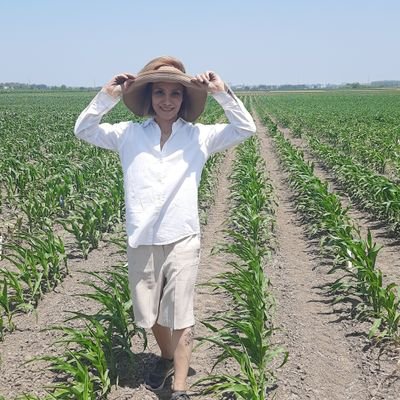
Mitra GhotbiLife at the soil–plant–microbe interface.
I study how plants, microorganisms and soil chemistry interact—and how these relationships shape nutrient cycling and recovery from environmental stress.
My research connects rhizosphere biology, soil carbon and nitrogen cycling, and host-associated microbiomes. I combine controlled experiments and process measurements with molecular data and quantitative analysis to understand how biological interactions respond to changing environments.
01
Soil–plant–microbe interactions
Plant genotype, microbial partners and environmental stress shape rhizosphere processes, nitrogen cycling and plant performance. My work includes biological nitrification inhibition, microbial inoculation, flooding and herbivory.
02
Redox resilience
I investigate how hydrological disturbance reorganizes soil–plant–microbiome function, with a focus on electron-transfer processes, elemental coupling and recovery after flooding and drought.
03
Quantitative microbiomes
I integrate amplicon sequencing, metagenomics and reproducible computation to connect microbial community patterns with biological function, including absolute-abundance analysis using spike-in controls.
Developing independent research directions
Holobiont redox resilience across the maize domestication gradient, and HYDROREDOX: testing whether event-accessible electron-transfer architecture helps predict recovery after flood–drought cycles.
02 / Publications
Selected work
Research across agricultural soils, plant-associated communities and host microbiomes. The downloadable CV includes additional publications and outputs.
I develop R tools and workflows that connect biological questions to transparent, reproducible analysis.
R / Bioconductor · Version 1.2.0
DspikeIn
Estimating Absolute Abundance from Microbial Spike-in Controls
A modular workflow for absolute microbial quantification using single spike-in taxa or synthetic microbial communities. Supports spike-in validation, preprocessing, scaling-factor estimation, absolute-abundance conversion, bias correction and normalization, with phyloseq and TreeSummarizedExperiment compatibility.
BiocManager::install("DspikeIn")
First time using Bioconductor?
Install BiocManager first with install.packages("BiocManager"), then run the command above.
Diagnostics for Soil–Plant–Microbial Redox Recovery
Integrate longitudinal soil, plant and microbial observations to examine redox disturbance and recovery. Includes recovery signatures, fixed-reference domain scores, observation-coverage diagnostics, and conditional calculations of oxygen demand and accessible electron capacity.
Colour-calibrated image analysis for fungal melanization in confrontation assays, developed for Zymoseptoria tritici. Explore colony size and shape, spatial melanization profiles, growth inhibition and diffusion-halo geometry, with plate-level quality-control figures.
A little open-science toolbox for soil, plant and microbiome research. Explore public protocols here, or visit GhotbiLab for available methods and code.
01 / EXPERIMENTAL
Protocols
From sample collection to measurement. Practical methods for work at the bench and in the field.
SamplingLaboratory methodsQuality control
Explore the collection
Protocol collection
Public protocols are available below. Browse additional methods at GhotbiLab.
Plant Nutrition and Soil Science; Botanical Institute. Soil–plant–microbiome redox ecology and predictive-framework development.
2024 – 2026
Postdoctoral Research Associate
Middle Tennessee State University, USA
Host-associated microbiomes, metagenomics, synthetic communities and fungal–bacterial interactions.
2022 – 2023
Postdoctoral Research Associate
University of Illinois Urbana-Champaign, USA
Rhizosphere nitrogen cycling, biological nitrification inhibition and plant–microbe interactions.
2012 – 2015
Junior Researcher
ZEF, University of Bonn, Germany
Climate-change effects on plant performance, soil organic matter and greenhouse-gas emissions.
Education
2016 – 2022
Dr. agr. · Agricultural Sciences
University of Bonn & University of California, Davis
Joint doctoral programme in soil microbial ecology and biogeochemistry. Advisors: Claudia Knief and William R. Horwath.
2007 – 2009
M.Sc. · Crop Production & Weed Biocontrol
Shahed University, Iran
Biology and efficacy of Fusarium oxysporum isolates for biocontrol of Orobanche aegyptiaca.
2001 – 2006
B.Sc. · Crop Production & Plant/Seed Breeding
IAU, East Azerbaijan, Iran
Thesis: tissue culture of carrot cells.
Methods & technical expertise
Experimental & molecular
Greenhouse, mesocosm and field experiments; rhizosphere processes; microbial inoculation and synthetic communities; plant, root, soil and gas measurements; stable isotopes; DNA/RNA workflows; 16S/ITS profiling; metagenomics and transcriptomic analysis.
Computational & statistical
R, Bioconductor and Linux; mixed models, multivariate analysis and ecological networks; genome-resolved workflows; reproducible pipelines and R package development. Additional tools include TASSEL, Cytoscape, Gephi, SigmaPlot and GenGIS.
Awards, service & languages
ISME19 Travel Grant (2024); FEMS Congress Grant (2023).
PhD Project Scholarship, UC Davis (2015–2017); WASCAL Scholarship, University of Bonn (2012–2014).
Earlier awards include IFOAM, NAAEE, ICM9, EWRS and IWSS support.
ISME community mentoring; journal peer review, including The ISME Journal and Applied Soil Ecology.
Memberships: ISME, MSA, ASA, CSSA, SSSA and FEMS.
Persian/Farsi (native), English (fluent), German (B1).
06 / Teaching & mentoring
From a biological question to a defensible conclusion.
I teach microbial ecology, bioinformatics and statistics by connecting mechanisms, experiments, measurements and interpretation. Reproducible code is part of the scientific argument.
My mentoring spans undergraduate, graduate and early-career researchers at UIUC, MTSU and Kiel. I emphasize clear expectations, constructive feedback and growing independence, with multiple entry points for students from different disciplinary backgrounds.
07 / Contact
Let’s connect.
For research collaborations, academic opportunities and conversations about soil–plant–microbe interactions.